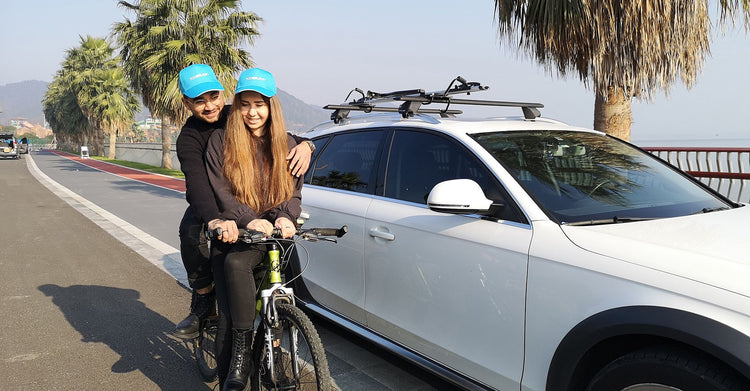
Cross Bar Compatibility: The Real Truth About "Universal" Roof Racks for Safe Kayak Transport
Most roof rack manufacturers toss around the word "universal" like confetti, but here is the industry reality they often gloss over: cross bars are never truly universal—they must be precisely matched to your specific roof type, attachment method, and bar dimensions to ensure a safe fit. Industry experts at Rack Attack make this crystal clear: different vehicles require distinct base rack systems, so relying on generic "one-size-fits-all" claims is a gamble; instead, always verify compatibility using vehicle-specific fit guides before any purchase.
While most aftermarket roof‑rack systems offer versatile components that can be adapted to different vehicles, they must still be precisely matched to your specific roof type, bar spread, and weight limit to function safely. It’s not as simple as swapping bars from one car to another; you need to rigorously verify compatibility for mounting towers, load ratings, and dimensions to prevent structural failure.
Skip these checks, and you're risking equipment damage, vehicle damage, or worse - complete system failure at highway speeds.
This guide breaks down exactly what you need to know about cross bar compatibility, from mounting requirements to load calculations, so you can transport your kayaks and bikes safely without overspending on unnecessary features.
TL;DR: The Essential Compatibility Checklist
Cross bars aren't truly universal despite marketing claims. Here's what actually matters:
- Roof type compatibility: Factory rails, flush rails, fixed points, or naked roof
- Weight limits: Check your vehicle's dynamic roof load rating (typically 100-200 lbs)
- Dimensional fit: Measure your roof configuration and required bar spread
- Mounting system: Verify tower/clamp compatibility before buying
Most aftermarket systems work across multiple vehicles, but compatibility always depends on these four factors.
What "Universal" Really Means (Spoiler: It's Complicated)
Universal cross bars fit multiple vehicle types, but they are definitely not one-size-fits-all solutions. Tooenjoy's expert guide clarifies that true compatibility depends on your specific roof configuration—whether raised rails, flush rails, or bare roofs—and requires adjustable mounting systems rather than just a generic bar. This confirms that a safe "universal" fit is about the precise match between the crossbar's adjustment range and your vehicle's unique dimensions, not just the bar itself.
Your vehicle's mounting system dictates which cross bar style will work, not the other way around. Experts note that vehicles with factory side rails offer the most versatile compatibility, whereas naked roofs are significantly more restrictive, typically requiring specialized clip-based fit kits that limit your aftermarket options. This means if you have a bare roof, you can't just grab any rack off the shelf—you're likely locked into a specific custom build.
Weight capacity matching is non-negotiable. Cross bar ratings must equal or exceed your planned cargo load, and many vehicle manuals specify dynamic roof load limits ranging from 75–165 lbs, with the 2024 Subaru Outback rated at 150 lbs dynamic capacity for crossbars and 176 lbs for roof rails including rack weight. For kayaks, this distinction matters significantly since recreational kayaks typically weigh 30–40 lbs, sea kayaks range from 50–70 lbs, while fishing kayaks often exceed 70–120 lbs with gear—all critical factors when calculating your safe load budget.
The bottom line? Universal cross bars work across many vehicles, but you need to verify the specifics match your setup every single time.
Vehicle-Specific Mounting: Why Your Roof Type Matters More Than Marketing Claims
Factory roof rails versus naked roof installations create completely different compatibility scenarios. Experts at Rack Warehouse note that crossbars designed for raised factory rails offer superior versatility and fit a wide range of SUVs, whereas naked-roof installations are far more restrictive, typically requiring precise, vehicle-specific fit kits that lock you into a single configuration. This means if you have raised rails, you have options; if you have a naked roof, you have a project.
Some vehicles have flush rails that look like naked roofs but actually require completely different mounting systems. As Tooenjoy experts clarify, flush rails sit flush against the roof surface but require specific low-profile mounting feet designed specifically for that rail geometry, attaching directly to hidden structural attachment points beneath the rail. Getting this distinction wrong means your expensive crossbars won't fit—or worse, will fail catastrophically under load.
OEM vs Aftermarket: The Real Cost Breakdown
The cost difference between OEM and aftermarket systems is significant. Toyota's official parts site shows OEM crossbar kits typically priced at $310 MSRP (crossbars alone), while major aftermarket retailers like REI list quality options from Thule and Yakima ranging $150–$320 for bars alone, and you'll still need to factor in towers, feet, and professional installation—which often adds another $150–$300 to the total project cost. Budget wisely: OEM often means faster turnaround and integrated compatibility, but aftermarket gives you options to customize for less.
OEM crossbars for vehicles with flush rails can cost several hundred dollars installed, while comparable aftermarket aero bar systems from brands like Brightlines, Yakima, and Thule are often significantly cheaper—sometimes $100–$200 less—and frequently offer higher stated load ratings. For example, a 2024 Subaru Crosstrek OEM setup ($178) offers 150 lbs capacity, while Thule WingBar Evo aftermarket bars cost $409 but deliver 220 lbs capacity. The trade-off: aftermarket bars are louder and require removal more often, while OEM wins on aesthetics and convenience.
Premium aftermarket systems like Tooenjoy's 301W Series cross bars offer 198 lb capacity with aerodynamic aluminum construction and T-slot versatility. These systems provide locking tower covers, broad vehicle compatibility, and integration with lift-assist systems for serious outdoor enthusiasts.
Weight Capacity: Where Most People Get It Dangerously Wrong
Calculating safe weight limits starts with your vehicle's specifications, not the cross bars. This emphasize that the load rating of a complete rack system is limited by the lowest-rated component—a principle known as "the weakest link". Your fancy 200-lb crossbars are useless if your roof is rated for only 150 lbs; in that case, 150 lbs is your absolute maximum, period. This is why checking your vehicle's owner's manual first—before buying any rack—is non-negotiable.
Cross bar weight capacity must equal or exceed your heaviest single item, with proper distribution across both bars. Tooenjoy experts emphasize that the fundamental principle of safe roof loading is spreading weight evenly across multiple mounting points rather than concentrating stress on a single crossbar—position your heaviest items as close as possible to the vehicle's centerline and side rails to minimize leverage stress. This distribution approach dramatically reduces structural strain on your roof system compared to unbalanced loading.
Kayaks create significant wind load and leverage forces that multiply effective weight during highway driving. Multiple bikes can also push limits quickly - bike racks with several bikes can exceed 90 lbs total, requiring cross bars rated for at least 100+ lbs capacity.
The Real Consequences of Getting This Wrong
AAA analysis of 2011-2014 crash data found that road debris—including items falling from vehicles—was a factor in more than 200,000 crashes and about 39,000 injuries over four years. Many of these incidents involved overloaded or improperly secured roof cargo.
In one Jeep owner forum thread, a user reported noticeable bowing of aftermarket crossbars after loading two heavy fishing kayaks with a combined weight above the rack's 120-lb rating. This is exactly why you can't just trust the marketing numbers.
Dimensional Requirements: Getting the Fit Right
Optimal cross bar length balances cargo capacity with vehicle proportions and legal requirements. Cross bars should provide adequate overhang for your cargo while maintaining reasonable proportions to your vehicle.
Thule WingBar Evo crossbars are commonly sold in 47, 53, and 60 inch lengths, with shorter lengths (around 47-53 in) recommended for most sedans/small SUVs. REI notes that bars should not extend excessively beyond the sides of the vehicle to avoid safety and potential legal issues; users should check local regulations on allowable overhang.
Crossbar Spacing: The Critical Measurement Nobody Talks About
Center distance between crossbars affects load stability significantly. Industry guidance recommends a 24–36 inch crossbar spread for standard kayaks (10–12 feet), with the wider end of that range preferred for longer boats to improve tracking stability. For J-cradle systems, the minimum safe bar spread is 24 inches, but wider spacing—up to 36 inches—significantly improves stability and load distribution, especially for longer vessels. Many paddlers overlook this detail, but undersized spacing concentrates stress on a narrower hull section, increasing the risk of pressure points and hull deformation during highway transport.
Systems like Tooenjoy's lift-assist work best with crossbars 47+ inches wide and a bar center distance of about 29.76 inches for optimal lever balance and stability. For example, the Thule ProRide 598 roof bike rack specifies a minimum bar spread of about 18 in (46 cm); many similar roof-mount bike racks require roughly 18-24 in of spread.
Installation and Safety: Professional vs DIY Reality Check
Professional versus DIY installation affects both cost and safety outcomes. Most modern crossbar systems can be installed by consumers in about 30-60 minutes with basic tools, depending on roof type. National average shop labor rates around $100-$150/hour mean professional roof rack installation typically costs $100-$200 for a standard crossbar setup.
DIY installation saves money but requires careful attention to manufacturer specifications. Leading equipment manufacturers such as OCAM Industries warn explicitly that improper installation can result in serious injury, death, or rack detachment at highway speeds, and emphasize the critical importance of following torque specifications (typically 15–25 foot-pounds) and rechecking all fasteners after the first 50–100 miles of driving. Loose fasteners are not a cosmetic issue; they are a catastrophic safety failure waiting to happen.
Essential Safety Checks That Could Save Your Life
Essential safety checks become critical after installation. Tooenjoy and industry experts recommend stopping after a short drive (10–100 miles) with a new rack and rechecking that all bolts, knobs, and clamps are securely tightened. Crossbars must be re-tightened after initial use to account for vibration settling and thermal expansion—repeated checks every month and a full reinstallation once yearly are standard practice to keep your rack secure. Neglecting these checks is not a minor oversight; it's the direct path to catastrophic failure at highway speed.
NHTSA defect investigations into aftermarket racks have in some cases attributed bar detachment to improper installation rather than inherent product failure. Load testing with actual cargo weight before highway speeds ensures system integrity and identifies potential issues.
Top Cross Bar Recommendations by Use Case
Premium Options for Heavy-Duty Use
Tooenjoy markets its 301W Series as high-capacity (up to 198 lb) "universal" crossbars for many cars, SUVs, and trucks with compatible roof rails. These cross bars feature locking tower covers, T-slot versatility, and integration with lift-assist systems for serious outdoor enthusiasts.

Thule and Yakima commonly rate many passenger-vehicle roof rack systems at about 165 lb (75 kg) maximum evenly distributed load, making Tooenjoy's higher capacity particularly valuable for heavy loads. Professional-grade construction provides years of reliable service and positions as a strong alternative to premium brands.
Budget-Friendly Universal Solutions
Budget square-bar kits from brands like Malone and generic sellers often price in the $80-$150 range and advertise capacity in the 110-150 lb range, targeting occasional users. Basic square bar systems provide adequate performance for lighter loads under 75 lbs total capacity, though they may lack durability for frequent heavy loading.
REI recommends higher-quality, higher-capacity rack systems with good aerodynamics for heavy or frequent use such as off-road trips or carrying multiple kayaks. Round cross bars offer good aerodynamics but limited accessory compatibility compared to T-slot designs.
Troubleshooting Common Compatibility Issues
Unusual vehicle configurations require creative solutions when standard systems don't fit. Yakima warns that if your vehicle isn't listed in the fit guide, you'll likely need a custom or model-specific solution; do not attempt to 'make it work' with a rack not approved for your car.
Car and Driver's roof-rack guide notes that many modern crossovers have panoramic sunroofs, antennas, or spoilers that can limit standard crossbar placement. Thule notes that features such as sunroofs or shark-fin antennas may interfere with rack placement and advises checking for adequate clearance before final installation.
Some vehicles need reinforcement plates or spreading systems to distribute mounting loads safely. An overlanding build thread documented a pickup with a fiberglass canopy that required internal reinforcement plates to safely carry rooftop tents and kayaks; without reinforcement, the shell manufacturer limited roof load to under 100 lb.
Solving Noise and Vibration Problems
Aerodynamic improvements often solve noise and vibration problems. Thule WingBar and Yakima JetStream are specifically marketed as reducing wind noise and "whistling", and accessories such as wind fairings are recommended to address persistent noise. Proper installation torque prevents rattling and movement that creates noise and wear.
Maximizing Your Cross Bar Investment
Multi-purpose accessories and attachments multiply the value of quality cross bar systems. T-slot cross bars accept kayak carriers, bike racks, cargo boxes, and ski attachments with simple hardware changes. REI recommends that if you plan to carry different types of gear through the year, choose a bar system with T-tracks; they make swapping accessories simple and future-proof your setup.
Recent gear reviews noted that multi-sport users can save money over time by using T-slot crossbars that accept multiple accessories instead of buying separate, dedicated racks for each sport. Universal mounting systems allow seasonal accessory swapping without tools or permanent modifications.
Quality cross bars support multiple simultaneous accessories up to total weight capacity limits. Tooenjoy crossbars use aluminum alloys and stainless hardware, are rated for 198 lb, and are marketed as long-term, multi-purpose solutions for kayaks, bikes, cargo boxes, and more.
Long-Term Maintenance That Actually Matters
Long-term maintenance extends system life significantly. Regular cleaning and inspection are critical, as road salt and dirt corrode steel rack components and jam locks if left on year-round without maintenance, while aluminum aero bars resist corrosion far better than steel and seasonal removal combined with winter washing—especially after salt exposure—significantly reduces deterioration. For those who keep racks installed permanently, we recommend washing with fresh water after salt exposure, inspecting powder coating for chips, and lubricating locks to prevent corrosion—making seasonal off-season removal optional but smart. The material choice matters: cheap steel will rust aggressively in winter conditions, while powder-coated aluminum or quality stainless options survive neglect far better.
Regular cleaning prevents corrosion and maintains smooth operation of moving parts and locking mechanisms. Annual lubrication of pivot points and adjustment mechanisms ensures continued smooth operation, while proper storage during non-use seasons protects finish and extends overall system lifespan.
Ready to find the perfect cross bar setup for your vehicle? Check out Tooenjoy's complete compatibility guide to match your specific vehicle and gear requirements, or explore their premium roof rack cross bar systems designed for serious outdoor enthusiasts who need maximum capacity and versatility.